
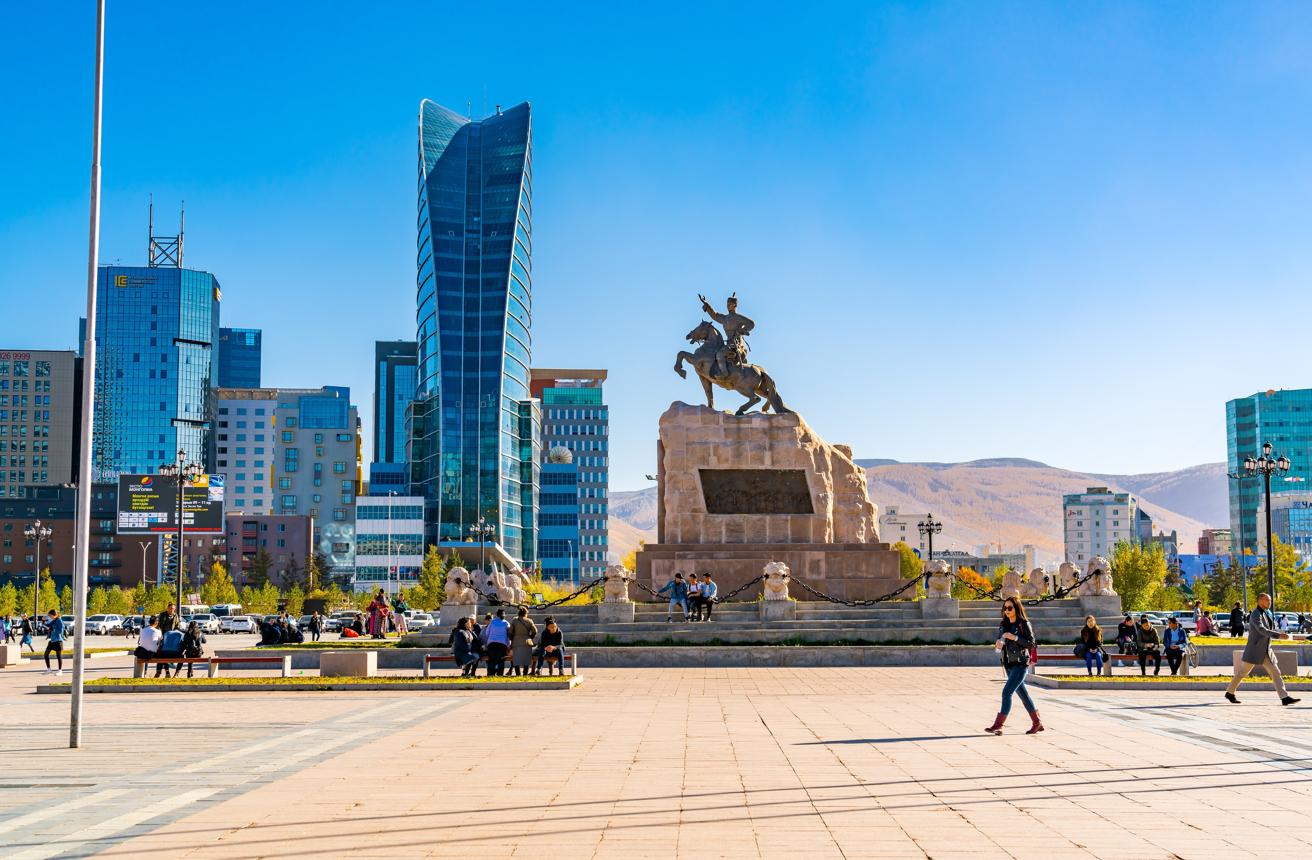
Mongolia's Investment Market in 2026: Current Landscape and Opportunities
An Investment Guide for Chinese Investors
Introduction
Located between China and Russia, Mongolia offers a strategically important market supported by abundant natural resources, geographic advantages and growing regional trade opportunities. In recent years, mining activity, infrastructure development, international trade and economic cooperation have continued to shape the country's investment landscape.
For Chinese investors, Mongolia represents more than a destination for mining investment. It also offers opportunities to develop long-term business operations in energy, construction, manufacturing, agriculture, logistics, trade and information technology.
In 2026, Mongolia introduced significant reforms to its investment-related legal framework, focusing on strengthening investor protection, improving access to public services and creating a more business-friendly regulatory environment.
This article examines Mongolia's investment landscape, promising sectors, recent legal reforms and key considerations for Chinese investors entering the market.
1. Mongolia's Economic and Investment Landscape
According to the World Bank's October 2026 outlook, Mongolia's economy is projected to grow by 5.7% in 2026. Mining output, exports and major infrastructure investments remain important drivers of economic activity.
Between 1990 and 2025, Mongolia attracted approximately USD 52.1 billion in cumulative foreign direct investment (FDI). Based on the 2025 investment-source breakdown, the Netherlands accounted for 44.5%, China 12.6% and Singapore 8.2%.
The sectoral distribution of FDI was as follows:
Mining and quarrying: 74.4%
Wholesale and retail trade: 9.6%
Financial and insurance activities: 3.9%
These figures demonstrate that foreign investment in Mongolia remains heavily concentrated in mining. At the same time, they highlight the potential to diversify investment into non-mining sectors.
2. Key Investment Opportunities for Chinese Investors
2.1 Mining and Mineral Processing
Mongolia has significant reserves of coal, copper, gold, iron ore and other minerals. Mining remains one of the country's main drivers of exports, foreign investment and economic growth.
Potential investment areas include:
Copper and non-ferrous metal processing
Mining equipment supply and maintenance
Mining engineering and technical services
Mineral transportation and warehousing
Mining-related infrastructure
Investors should carefully assess mineral licences, environmental impact assessments, water-use requirements, taxation and relevant government approvals before committing capital.
2.2 Energy and Renewable Energy
Mongolia has substantial solar and wind energy potential, while further investment is needed in electricity generation, transmission and energy storage infrastructure.
Potential investment areas include:
Solar power generation
Wind power projects
Battery energy storage systems
Electricity transmission and distribution infrastructure
Industrial energy management solutions
Chinese energy technology providers, equipment manufacturers and engineering companies may explore opportunities for investment and cooperation in this sector.
2.3 Construction, Infrastructure and Real Estate
Ulaanbaatar's urban expansion, industrial development and growing transportation needs continue to create demand for infrastructure investment.
Potential opportunities include:
Industrial and logistics parks
Warehousing and distribution centres
Commercial and service buildings
Construction materials manufacturing
Engineering and construction services
Residential and real estate development
Investors should carefully review land-use rights, construction permits, utility connections, infrastructure availability and project financing arrangements.
2.4 Agriculture and Food Processing
Mongolia has substantial livestock resources and an established foundation in meat, dairy, cashmere, wool and leather production.
Potential investment areas include:
Meat processing facilities
Dairy production
Cashmere and textile manufacturing
Leather processing
Food storage and cold-chain logistics
Livestock product exports
Chinese investors may explore partnerships that combine Mongolia's raw material resources with processing technology, production capabilities and access to Chinese consumer markets.
2.5 Trade, Logistics and Cross-Border Commerce
China is one of Mongolia's most important trading partners.
According to Mongolian customs data for January–August 2026:
Total foreign trade turnover reached USD 22.774 billion.
Exports amounted to approximately USD 14.00 billion.
Imports amounted to approximately USD 8.373 billion.
Exports to China reached USD 13.326 billion.
Imports from China reached USD 3.408 billion.
These figures demonstrate the scale of economic and commercial relations between the two countries.
Potential investment areas include:
International freight and forwarding
Cross-border logistics
Customs clearance services
Warehousing and distribution centres
E-commerce
Supply chain management
2.6 Information Technology and Digital Services
Mongolia's ongoing digital transformation, expansion of electronic services and growing adoption of financial technology and artificial intelligence create opportunities for technology investors.
Potential investment areas include:
ERP and enterprise management systems
Accounting, finance and tax software
Cloud computing and data centres
Artificial intelligence solutions
Fintech and payment technologies
Digital transformation consulting
Technology companies may enter the Mongolian market through software localization, technology partnerships, local subsidiaries and cooperation with Mongolian businesses.
3. Mongolia's Investment Law and Regulatory Reforms in 2026
On 3 July 2026, Mongolia's Parliament adopted the Law on Economic Freedom and amendments to the Investment Law. The relevant amendments to the Investment Law entered into force on 31 August 2026.
The main areas of reform include:
3.1 Investment Incentives
Expanded tax incentives intended to encourage investment and reinvestment.
A reduction in withholding tax on interest income from eligible loans and debt instruments from 20% to 5%, subject to the applicable legal conditions.
A 100% customs duty exemption for eligible imported equipment used in construction projects and data centre and artificial intelligence infrastructure.
3.2 Protection of Foreign Investors
Establishment of an investor grievance mechanism.
Provision for investment disputes that cannot be resolved through negotiation or mediation to be referred to national or international arbitration, as mutually agreed.
Strengthened protection of investors' legitimate rights and interests.
3.3 Broader Market Access for Foreign Investment
The amendments expand foreign investment opportunities in areas including banking, environmental impact assessment, intellectual property services, agricultural commodity exchanges, renewable energy, data centres and artificial intelligence.
3.4 Investment Stabilization Certificates
The eligibility framework for investment stabilization certificates has been revised. Qualifying investment projects may be eligible for stabilization periods of 10 to 20 years, subject to statutory requirements.
These incentives and provisions do not automatically apply to every foreign investment project. Eligibility must be assessed based on the relevant industry, investment amount, investment structure, intended use of imported equipment and applicable legislation.
4. Key Risks Chinese Investors Should Consider
Before investing in Mongolia, Chinese investors should conduct a comprehensive assessment of the following areas.
Legal and regulatory risks: Industry-specific licences, land-use rights, corporate structures, foreign investment requirements and government approvals.
Tax risks: Corporate income tax, value-added tax, withholding tax, customs duties, social insurance and the application of the Mongolia–China double taxation agreement.
Currency and financial risks: Exchange-rate fluctuations, investment financing, dividend distributions and regulatory requirements relating to the transfer of profits abroad.
Operational risks: Electricity, water, transportation, logistics, human resources and supply chain conditions.
Business partner risks: Verification of local partners' corporate registration, shareholders, financial position, licences, liabilities and litigation history.
5. Market Entry Options for Chinese Investors
Depending on investment size, business objectives and industry requirements, Chinese companies may consider the following market entry approaches.
1. Establishing a foreign-invested company
Suitable for businesses planning long-term operations and seeking to establish an independent presence in Mongolia.
2. Establishing a joint venture with a Mongolian company
Provides opportunities to benefit from local market knowledge, business networks, customer relationships and operational experience.
3. Investing in or acquiring an existing company
May allow investors to enter the market more quickly by obtaining existing business operations, employees, assets and commercial relationships.
4. Starting with trade and service cooperation
An option for companies seeking to understand the market and manage initial investment costs before committing to larger projects.
Each approach has different implications for corporate structure, taxation, licensing, financing and contractual obligations. Professional assessment is recommended before selecting an investment structure.
6. InTax S Counsel – Your Professional Partner in Mongolia
For Chinese companies entering Mongolia, working with a professional advisory firm familiar with local legislation, taxation, accounting and the business environment can help reduce market entry risks and improve operational efficiency.
InTax S Counsel provides integrated professional consulting and business support services to Chinese investors and companies seeking to establish and develop operations in Mongolia.
Our services include:
Company Registration: Establishment of foreign-invested companies, corporate restructuring, registration amendments and dissolution.
Investment Advisory: Market research, project assessment, investment planning and business cooperation support.
Tax Advisory: Tax planning, incentives and exemptions, cross-border taxation and tax risk assessment.
Accounting Services: Bookkeeping, financial reporting, tax returns and payroll management.
Visa and Residency Services: Assistance with visa and residence permit applications for investors, executives and foreign employees.
Legal Advisory: Corporate law, commercial contracts, agreements, licences and permits.
Customs and Import Services: Import and export documentation and customs clearance support.
Translation Services: Professional written and oral translation between Mongolian, Chinese and English.
We provide solutions tailored to each client's business objectives and offer professional support to help companies establish and maintain sustainable operations in Mongolia.
Conclusion
In 2026, Mongolia remains a market of interest for international investors, supported by investment law reforms, mining activity, international trade and infrastructure development.
For Chinese investors, opportunities extend beyond mining into energy, manufacturing, agriculture, logistics and information technology.
However, successful investment requires more than capital and technology. Understanding Mongolian legislation, implementing appropriate tax planning, selecting reliable local partners and assessing business risks in advance are essential to building sustainable operations.
InTax S Counsel – Your Professional Partner for Investment and Business Development in Mongolia.
This article is intended for general informational and research purposes only and does not constitute formal legal or tax advice. Investors should obtain professional advice based on the specific circumstances of their proposed projects before making investment decisions.